SEVA First Innovation Challenge 2026
A national innovation journey empowering students, researchers, startups, industry and government teams to build practical solutions for Viksit Bharat.
Choose the right challenge
The best robotics competition is one that matches a student’s current skills while encouraging a meaningful technical challenge. Explore Robotic Sir’s published competitions and use this guide to choose a format that helps your team learn, build and compete with confidence.
View competitionsUseful competition guidance
There is no single competition that is best for every student. The right choice depends on a team's age, experience, available preparation time and the kind of problem they want to solve. A first-time builder may benefit most from a well-explained challenge with achievable constraints, while an experienced team may look for a tougher autonomous or engineering problem.
A strong competition rewards more than a final result. It gives students a reason to plan, prototype, test, troubleshoot and communicate as a team. Clear rules and transparent judging help participants focus their effort on engineering rather than guessing what will be evaluated. Use the published competition page to decide whether a specific event is the right fit.
Build · compete · grow
A national innovation journey empowering students, researchers, startups, industry and government teams to build practical solutions for Viksit Bharat.
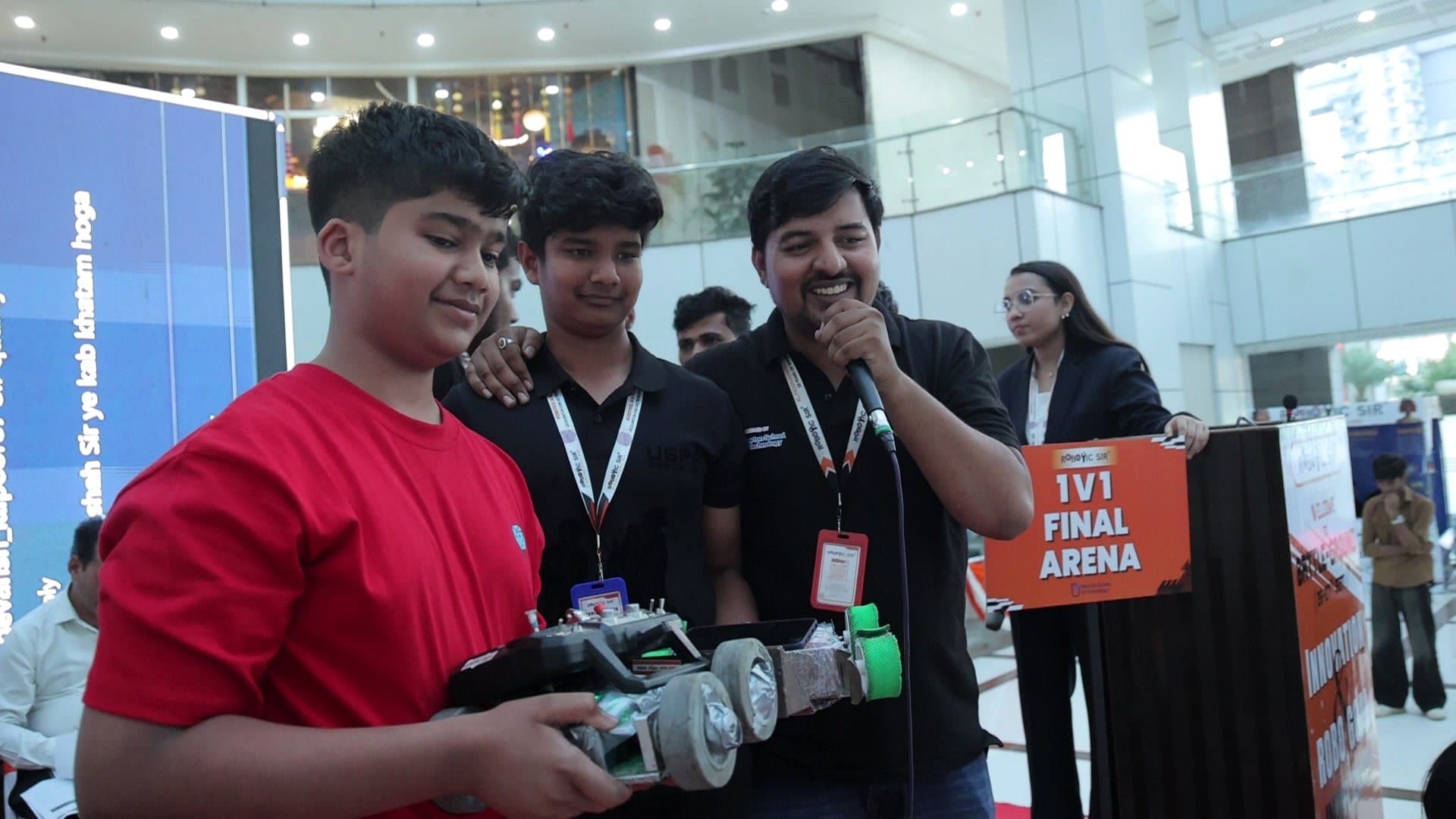
A national robot-soccer championship in Noida where junior and senior teams competed in arena-based matches using self-built robots.
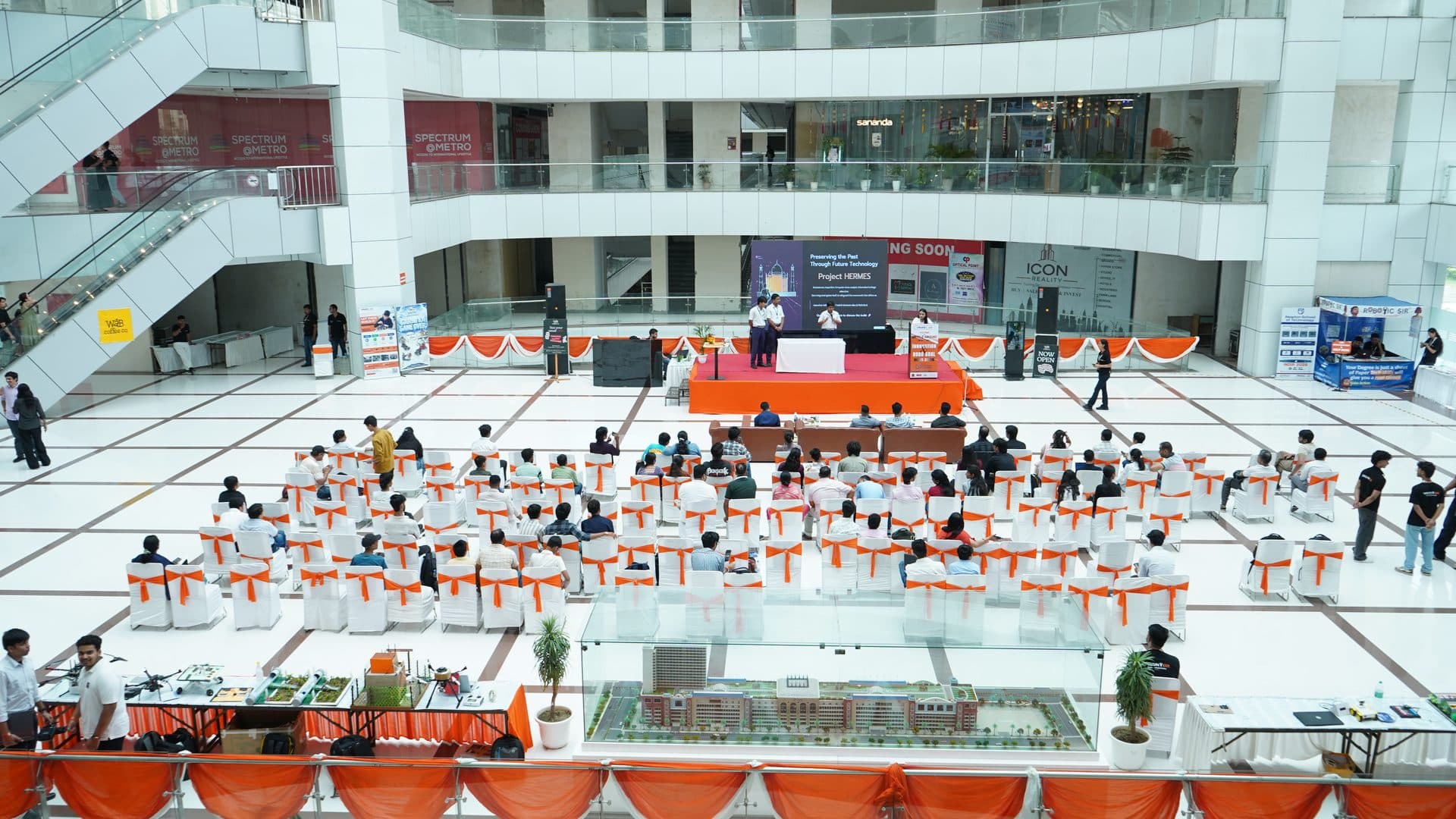
Innovation India 2026 was a free national hardware innovation competition for school students in Classes 8–12, held in Noida on 26 September 2026.
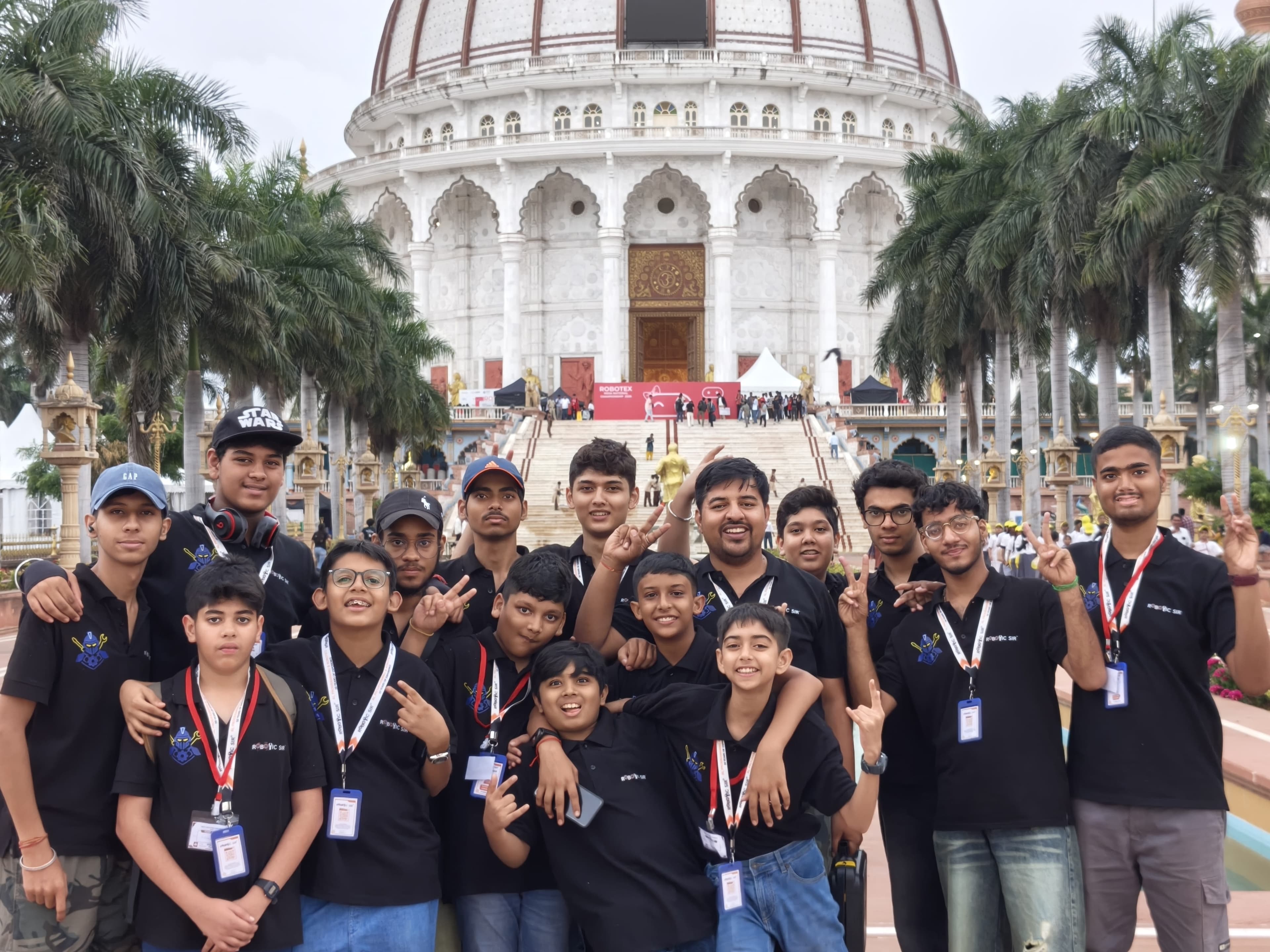
Robotic Sir AI India fielded a 21-member delegation at the Robotex India National Robotics Championship, held at the World Peace Dome, MIT-ADT University, Pune. The team secured 3rd Position on Day 1 in the Advanced Entrepreneurship Challenge, competing across Maze Solver, Folk Race, Mega Sumo, and
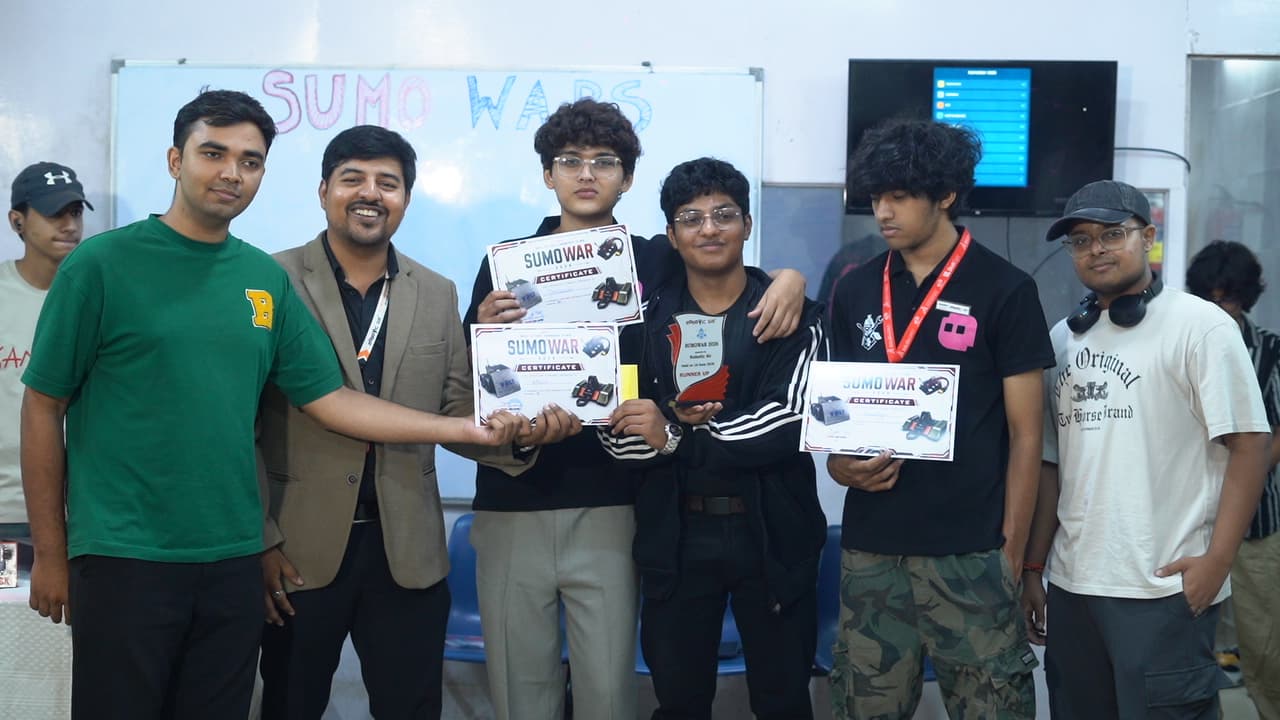
Robotic Sir AI India's first autonomous sumo robotics competition, held June 14, 2026 — a circular-arena push-out battle testing chassis design, motor torque, and real-time sensor navigation. Team Kronos took the top spot, with cash prizes, trophies, and certificates awarded across five categories.
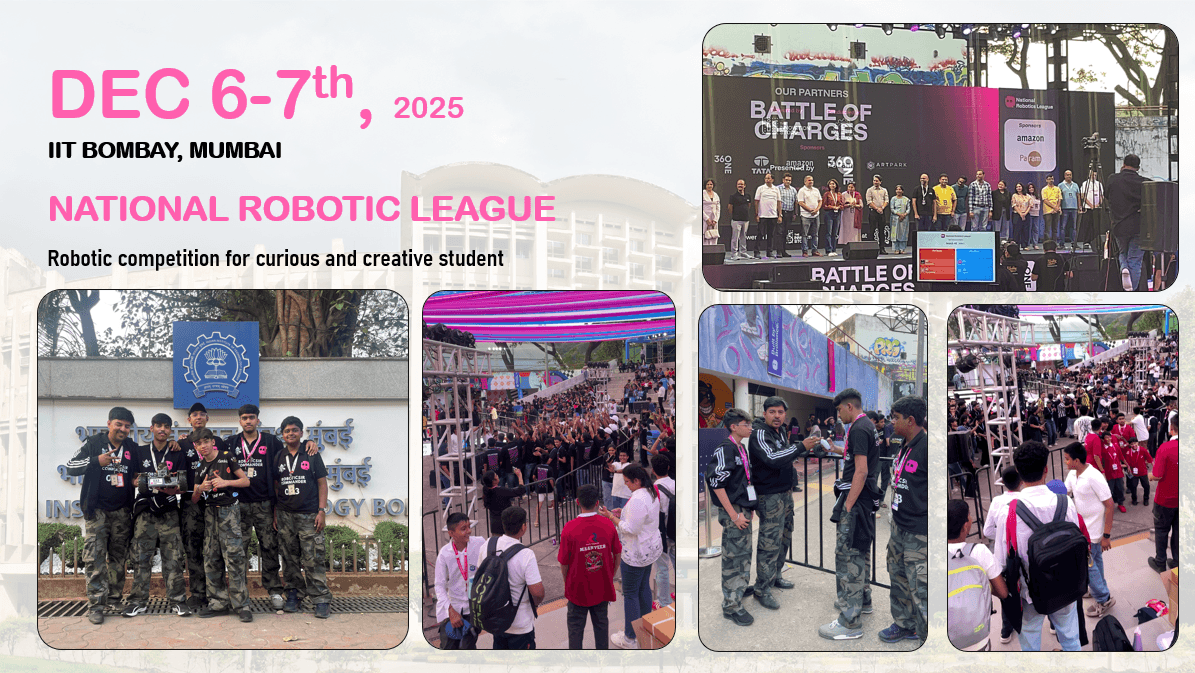
7 students from Robotic Sir AI India were selected to compete at the National Robotics League 2025, held December 6–7, 2025 at IIT Bombay — India's largest student robotics championship, with 600 students across 100 teams from 65+ schools. The team showcased two original prototypes.
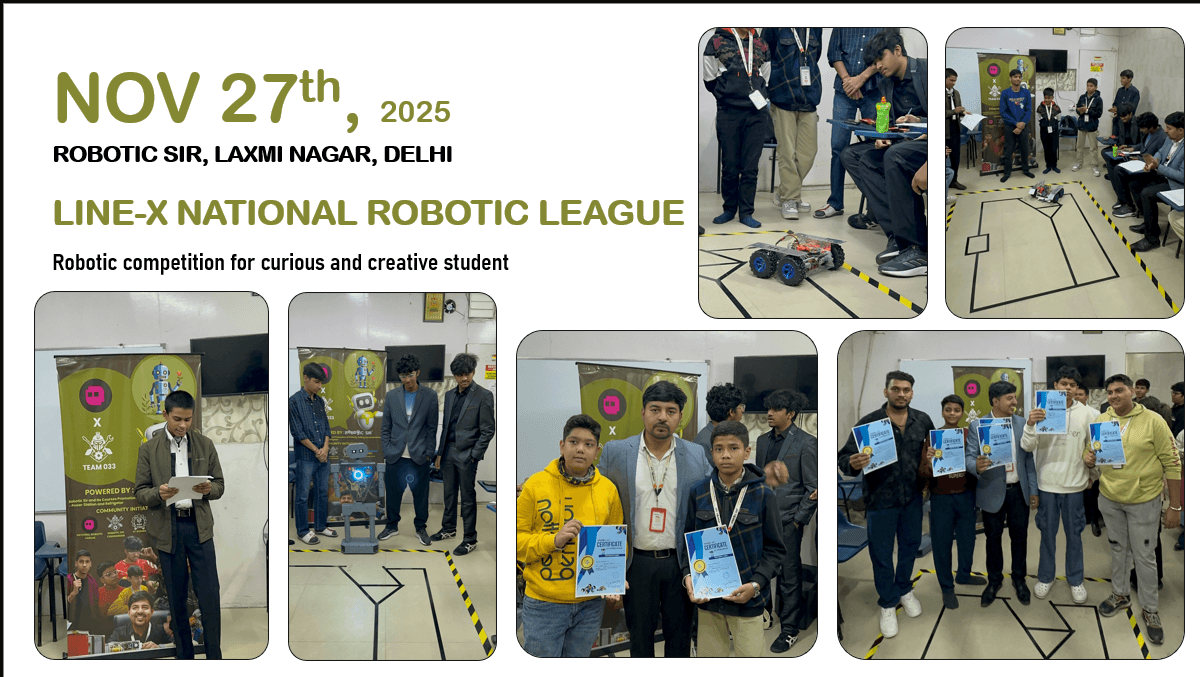
LINE-X National Robotic League 2025 is a premier autonomous line-following robotics championship in Delhi, challenging teams to build high-performance robots that navigate complex tracks with speed, precision, and efficient sensor calibration.
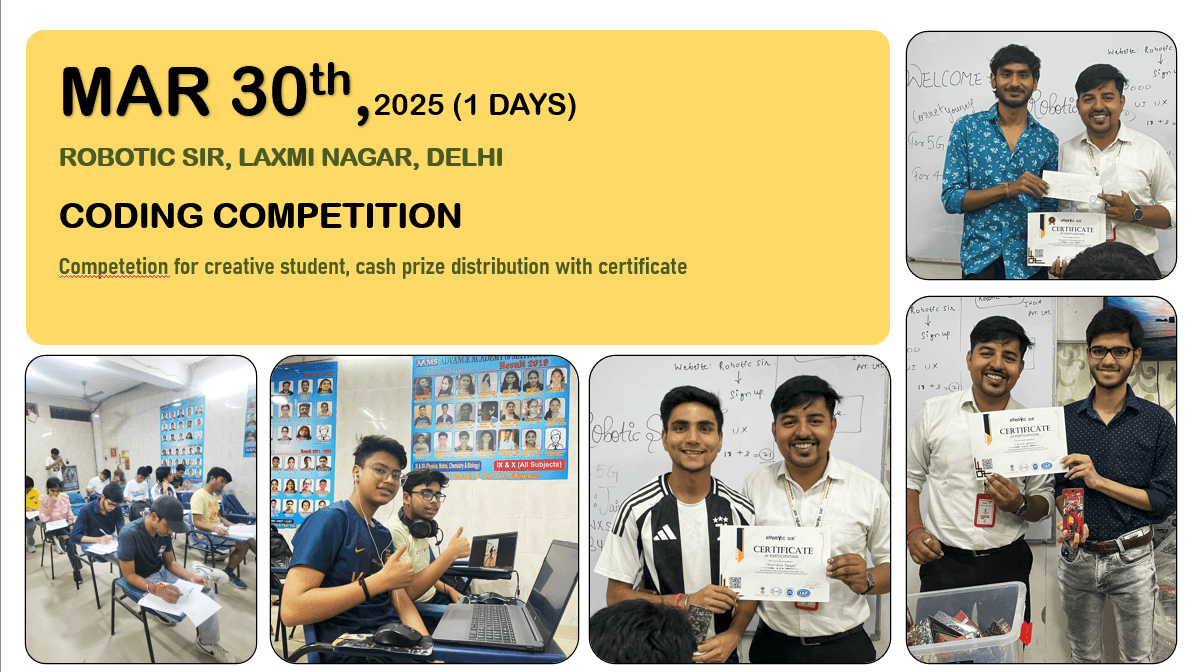
Test Your Code was a one-day coding competition hosted by Robotic Sir at its Delhi Centre on March 30, 2025, featuring debugging, logic, programming and problem-solving challenges for school and college students.
Make an informed choice
Look for a challenge that stretches your current skills without requiring technology you cannot safely learn or test in time. The rulebook should make the expected technical level understandable.
The best events leave teams with transferable skills: interpreting requirements, building systems, programming behaviour, diagnosing faults and presenting decisions.
A published scoring method, constraints and disqualification rules make it possible to design and practise with confidence. Read these before committing to a build.
Consider deadlines, location or attendance mode, budget, team availability and the time needed for repeated testing. A good choice is one your team can properly prepare for.
Plan with confidence
Build with purpose
Start with a design review: describe the problem, your proposed solution and the risks before buying or assembling parts.
Divide the work into small tests—sensors, motors, code logic, power and mechanical stability—then combine them gradually.
Test failures deliberately. Try low battery power, noisy sensor conditions or an imperfect surface where relevant to the published challenge, and document what changes improve performance.
After the event, review what worked, what failed and what the next version would do differently. This reflection is often as valuable as the final ranking.
Need a foundation before your next challenge? Explore robotics learning pathways.
Competition FAQ
A worthwhile competition has a clear challenge, transparent rules and judging, an appropriate difficulty level, a safe learning environment and feedback or recognition that helps participants improve.
Yes, when the format matches their experience. Beginners should look for clearly explained requirements, realistic build time and opportunities to learn with a team or mentor.
Start with the challenge brief, build and test a prototype early, document each iteration and practise explaining your design choices. Hands-on robotics courses can help develop the electronics, programming and problem-solving skills used in competition projects.
Use the event rulebook as the checklist. Teams commonly need a tested robot, permitted tools and spare parts, power supplies, code backups and any required identity or consent documents. Do not assume an item is allowed unless the official rules say so.
They are the reliable place to check published dates, venue or online format, deadlines, fees, eligibility, changes to rules and registration status. Social posts can be helpful reminders, but the official event page should guide your final decision.